Bear Layered Shadow Box Laser Cut SVG
As a designer who spends more time staring at stitch charts and fabric swatches than sleeping, I approach every new digital asset with a healthy dose of skepticism. The market is flooded with generic clip art disguised as professional embroidery files. However, when I first opened the Bear Layered Shadow Box Laser Cut SVG, I paused. It wasn’t just another silhouette; it had a narrative. This design promises to bring a bold rustic statement to any project, but the real question for any serious embroiderer or small business owner is whether it translates well from screen to needle.
I recently put this file through its paces, not just by stitching it out on my home machine, but by visualizing how it would perform in a commercial context. Whether you are an Etsy seller looking for your next bestseller, a boutique owner curating seasonal collections, or a hobbyist making personalized gifts, understanding the practical application of a design like this is crucial. Here is my honest review of how the Bear Layered Shadow Box Laser Cut SVG holds up in real-world production.
The First Impression: Mood and Visual Weight
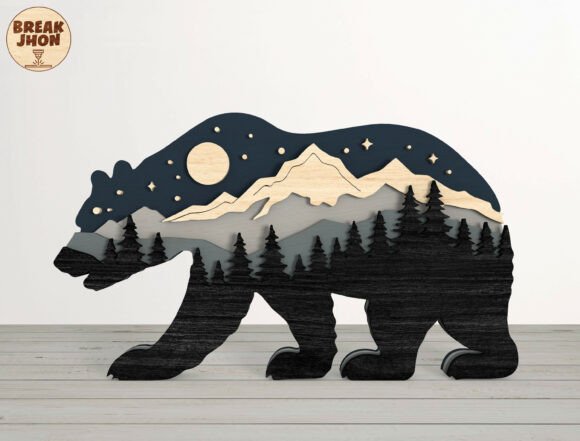
The immediate appeal of this design lies in its composition. It isn’t merely a bear; it is a landscape contained within a bear. The silhouette acts as a frame for mountains, a pine forest, a moon, and night sky details. This layered effect creates depth that is rare in standard embroidery designs. Visually, it feels substantial. It commands attention without being loud.
For a home decor item, this weight is perfect. It suggests durability and warmth. For a laser cutting hybrid project, the clean lines of the outer silhouette provide a sharp contrast to the intricate internal details. The mood is undeniably rustic and outdoorsy, which immediately narrows down the ideal use cases. This isn’t a design for a delicate lace handkerchief; it belongs on sturdy fabrics where texture can enhance the storytelling aspect of the mountain and forest elements.
Real-World Application: From Sketch to Stitch
I tested the concept of this design across several potential products to see where it truly shines. The versatility of the Bear Layered Shadow Box Laser Cut SVG allows it to adapt to various categories, but some applications are clearly stronger than others.
- Custom Apparel and Sweatshirts: Imagine this centered on the back of a heavyweight cotton sweatshirt. The large silhouette provides ample space for the internal details to breathe. On a chest pocket, however, the detail might become too busy. For a full-back design, it works beautifully, creating a premium look that justifies a higher price point for your custom apparel.
- Tote Bags and Canvas Goods: A tote bag design featuring this bear silhouette is an instant hit. The rugged theme pairs naturally with canvas or denim. When stitched with high-contrast thread colors, the mountain details pop against the neutral fabric. This is a staple item for craft fairs and online shops.
- Nursery and Baby Items: While the theme is wild, the execution can be soft. On a baby blanket or a onesie, using softer thread tones (like sage greens and warm creams) transforms the rugged bear into a gentle guardian of the woods. It makes for a memorable personalized gift that parents will actually display rather than hide away.
- Patches and Badges: The defined outer edge makes this an excellent candidate for an embroidered patch. If you are selling patches to outdoor enthusiasts, hunters, or camping groups, this design hits the right emotional notes. The layered interior adds value, making it feel like a collectible rather than a mass-produced sticker.
Where Caution Is Required
No design is flawless, and knowing where a design struggles is just as important as knowing where it succeeds. There are specific scenarios where the Bear Layered Shadow Box Laser Cut SVG requires careful handling.
First, consider the hoop size. Because the design contains fine details like pine needles and moon craters, shrinking it down to fit a tiny 4x4 inch hoop may result in muddy stitching. Small details tend to merge together, losing their definition. If you are working with a smaller hoop, you must inspect the digitization closely to ensure the stitch density hasn’t been compromised by scaling.
Second, fabric choice matters immensely. Textured fabrics like heavy tweed or loose-weave linen can obscure the finer internal lines. Similarly, stretchy knits require a strong stabilizer to prevent the dense fill stitches from puckering. If you are embroidering on dark fabric, you need to plan your thread colors carefully. A black bear on a navy shirt will disappear. High-contrast backing or bright accent threads are necessary to maintain visibility.
Finally, avoid placing this design on curved surfaces like caps unless you have significant experience with cap hoops. The complexity of the internal layers can distort if the fabric stretches unevenly during the stitching process. Flat surfaces like pillow covers, aprons, and wall hangings are far safer bets for maintaining crisp detail.
Practical Designer Notes for Production
Before you add this to your library of design assets or start producing small shop products, there are a few technical checks every designer should perform.
- Test on Scrap Fabric: Never trust a screen preview. Stitch the design on the actual fabric you intend to sell. Check how the satin stitch edges hold up and whether the fill stitch areas create a smooth surface or a lumpy texture.
- Review Stitch Density: Look at the density settings in your software. If the internal details are too dense, the fabric may become stiff and uncomfortable. If they are too sparse, the design will look thin and cheap. Adjustments may be needed depending on your machine’s capabilities.
- Black and White Mockups: Convert your design to black and white in your editing software. This helps you see the true shape and balance of the negative space. If the design looks cluttered in monochrome, it will likely be overwhelming in color.
- Check Licensing: Ensure you have the correct rights to sell finished items made with this file. Some digital embroidery files have restrictions on commercial use, especially for unlimited quantities.
- Stabilizer Selection: Use a cut-away stabilizer for woven fabrics to ensure longevity, especially for items that will undergo frequent washing. For knit fabrics, a tear-away might suffice for temporary projects, but cut-away is always safer for commercial embroidery quality.
Final Verdict
The Bear Layered Shadow Box Laser Cut SVG is a standout piece for anyone looking to add character to their embroidery project catalog. It bridges the gap between simple applique and complex multi-color designs, offering a unique visual hook that customers appreciate. It is particularly effective for holiday embroidery themes, outdoor branding, and rustic-themed handmade product lines.
By paying attention to fabric choice, hoop size, and thread contrast, you can maximize the impact of this design. It is not just a file; it is a tool for building brand consistency and customer trust. When executed well, a finished product featuring this bear silhouette tells a story before the buyer even reads the tag. For designers willing to put in the prep work, this design offers a high return on investment in terms of aesthetic appeal and perceived value.